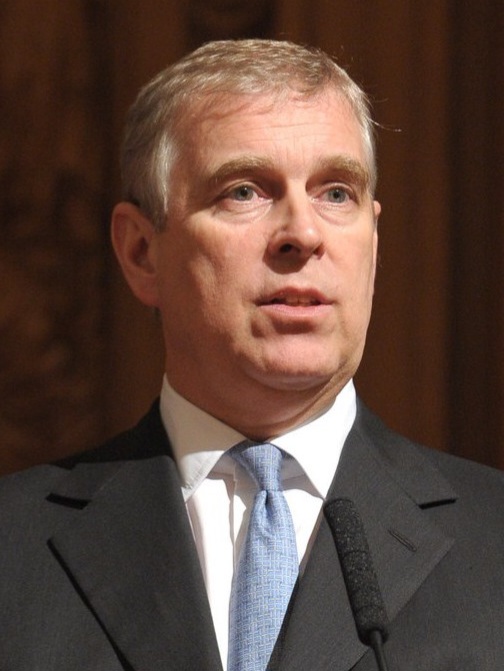
Uncertainty Looms: Prince Andrew's Release Under Investigation
The British public recently woke up to a seismic shift in the royal landscape: the news that one of their own, a younger brother of the King, had been arrested. Prince Andrew, officially Andrew Albert Christian Edward, Duke of York, and formerly known as Prince Andrew before being stripped of his royal titles, found himself embroiled in a serious legal investigation. While online search queries often span a wide range of topics, including public figures like "andrew stevens net worth," it is crucial to clarify that this comprehensive article focuses specifically on the unfolding legal developments surrounding Prince Andrew Mountbatten-Windsor. The Duke of York's re-emergence into the public spotlight, marked by an arrest and subsequent release under investigation, has ignited intense public scrutiny and raised profound questions about accountability, royal conduct, and the intricate workings of the UK legal system.
The arrest of such a high-profile figure sent shockwaves across the nation and internationally, prompting widespread discussion about the allegations of misconduct in public office and his past association with disgraced financier Jeffrey Epstein. This article delves into the specifics of his arrest, the implications of being "released under investigation," the complexities of the charge he faces, and what the future may hold for the former senior royal.
Arrest, Questioning, and the 'Released Under Investigation' Status
The events unfolded dramatically on a recent Thursday, with Prince Andrew spending approximately 11 hours in police custody. He was held and questioned at a police station not far from his current residence on the King's privately owned Sandringham Estate in Norfolk, England. This significant period of detention underscored the seriousness of the investigation, drawing a stark picture of a member of the royal family being subjected to the full force of the law.
Following this extensive questioning, Mountbatten-Windsor was released without charge. However, this release does not signify an end to his legal woes; rather, he remains "under investigation." This status, as explained by Vicky Lankester, a solicitor specializing in criminal and regulatory defense with U.K. law firm Brett Wilson, means that there are no strict deadlines for the police to adhere to. "This could be over very quickly, or it could be over in months, years. No one really knows," Lankester commented, highlighting the potential for a protracted legal process. Unlike being released on bail with conditions, being released under investigation means he is not subject to any restrictions; he is free to travel and is not required to report to a court or police department.
The arrest itself appears to relate to alleged communications between Mountbatten-Windsor and Jeffrey Epstein, particularly during his tenure as a UK trade envoy in 2010. Documents released by the U.S. Justice Department in January purportedly show these communications, suggesting the former prince may have allegedly discussed potential business dealings with Epstein while working for the government. This connection forms the crux of the misconduct allegations, placing his official duties under intense scrutiny.
Thames Valley Police, the department responsible for the arrest, have confirmed that their investigation is ongoing. As part of their efforts to gather evidence, officers are reportedly continuing to search Royal Lodge, Mountbatten-Windsor's former home on the grounds of Windsor Castle. The search extends to electronic devices such as computers, which could hold crucial information pertinent to the case. The former prince relocated to Norfolk on February 4th, reportedly under orders from his older brother, King Charles III, a move that only added to the public's perception of his increasing isolation from the core royal family.
The Enigma of Misconduct in Public Office
The specific charge under investigation, misconduct in public office (MIPO), is a rare and particularly complex one within the U.K. legal framework. As Lankester points out, it is an offense contrary to common law, rather than a statutory offense created by specific legislation. This distinction is significant:
- Common Law Offense: MIPO developed through judicial precedent rather than parliamentary acts. This often means its precise definition and application can be more fluid and subject to interpretation compared to statutory offenses.
- Rarity: Prosecutions for MIPO are uncommon. Legal guidance typically advises that if a statutory offense covers the alleged conduct, it should be pursued instead, as it provides clearer definitions and fairer parameters for all parties involved. This makes the decision to pursue MIPO against Prince Andrew noteworthy.
- Elements of the Offense: Generally, MIPO involves a public officer acting in such a way as to abuse the public's trust, either by doing something they shouldn't or failing to do something they should, where the act is connected to their public office and is committed without reasonable excuse or justification.
If Mountbatten-Windsor were to be charged with misconduct in public office, he would face a jury trial. The potential penalties are severe, with a maximum penalty of life imprisonment, underscoring the gravity of the allegations. The legal battle, should it proceed to charge, would undoubtedly be one of the most high-profile and scrutinised trials in modern British history, raising profound questions about the boundaries of royal privilege and accountability.
The Epstein Shadow and What Lies Ahead
The current investigation is inextricably linked to Prince Andrew's long-standing connection with the late convicted sex offender, Jeffrey Epstein. Despite his previous denials of wrongdoing regarding Epstein, the continuous drip-feed of information, particularly the U.S. Justice Department documents, has kept the narrative alive and fueled public demand for transparency and justice. Prince Andrew has not spoken publicly since his arrest, maintaining a silence that only adds to the aura of mystery surrounding his situation.
The timeline for a resolution remains highly uncertain. Legal experts suggest the investigation could span anywhere from weeks to years. This extended period of uncertainty will undoubtedly take a toll on Prince Andrew and continue to cast a shadow over the monarchy. His future is now squarely in the hands of the legal system, with several potential outcomes:
- No Charges: The police may conclude their investigation without finding sufficient evidence to bring charges.
- Charges Laid: If enough evidence is found, he could be formally charged with misconduct in public office or other related offenses. This would initiate a full criminal trial.
- Out-of-Court Settlement: While less likely in a criminal investigation, various forms of resolution or plea agreements can occur, though for a case of this magnitude, a public trial seems probable if charges are laid.
Regardless of the legal outcome, the reputational damage sustained by Prince Andrew is significant and likely irreversible. Stripped of his military titles and royal patronages, and no longer addressed as "His Royal Highness" in an official capacity, his public role has diminished drastically. His move to Sandringham, away from the symbolic heart of Windsor, also signifies a practical and symbolic distancing from the working monarchy. For more detailed insights into the potential trajectory of his legal journey, consider reading our article on Prince Andrew's Future: Legal Investigation After Epstein Ties.
Navigating the Uncharted Waters of Royal Scrutiny
The ongoing investigation into Prince Andrew is more than just a legal case involving an individual; it is a test of the UK's justice system when faced with a member of its most prominent family. It also presents a significant challenge for the royal family, particularly for King Charles III, who has committed to a streamlined and modern monarchy. The constant headlines and public discourse about Prince Andrew's situation divert attention from the King's own initiatives and maintain a lingering sense of scandal.
The public's perception of the monarchy is consistently shaped by the actions of its members. The principle of "no one is above the law" is being rigorously tested here, and the transparent handling of this investigation will be crucial for maintaining public trust in both the legal system and the institution of the monarchy itself. For individuals interested in the financial standings of various public figures, including those with names like "andrew stevens net worth," the stark contrast between personal wealth and legal entanglement highlights the multifaceted nature of public life. For Prince Andrew, his legal battle is set against a backdrop of unparalleled public interest and historical precedent, marking a turbulent chapter for a family accustomed to navigating the spotlight.
As the Thames Valley Police continue their meticulous work, the nation watches, awaiting clarity on a situation that remains shrouded in uncertainty. The outcome will not only determine Prince Andrew's future but also send a powerful message about accountability at the highest echelons of society.
