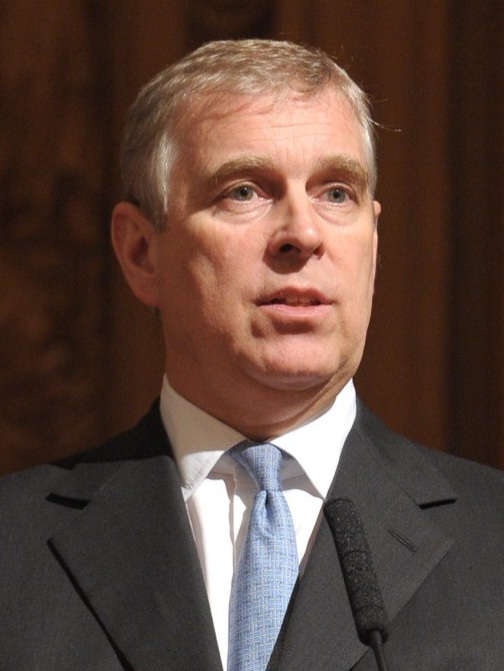
The Shifting Sands of Royal Scrutiny: Prince Andrew's Legal Horizon
The British public, and indeed the world, awoke to a stark new reality recently as news broke of Prince Andrew, the Duke of York and a younger brother to King Charles III, being questioned on suspicion of misconduct in public office. This development marks a significant escalation in the ongoing saga surrounding his connections to the late convicted sex offender, Jeffrey Epstein. While Prince Andrew was subsequently released without charge after approximately 11 hours in police custody, he remains very much under investigation. The implications for the former senior royal, who was stripped of his military titles and royal patronages in October, are profound and far-reaching, casting a long shadow over both his personal future and the institution he once proudly served.
The events unfolded dramatically, with Mountbatten-Windsor, as he is now formally known, spending considerable time being held and questioned by Thames Valley Police. This interrogation occurred not far from his new residence on the King's privately owned Sandringham Estate in Norfolk, England. His move to Norfolk on February 4th, reportedly under orders from his older brother, King Charles, adds another layer to the narrative of his diminished royal standing. The catalyst for this latest police action appears to be the release of various documents by the U.S. Justice Department, which have brought to light communications between Prince Andrew and Epstein, suggesting potential business dealings during his tenure as a UK trade envoy. The question on everyone's mind now is: what truly lies ahead for the Duke of York?
Unpacking "Misconduct in Public Office": A Rare and Serious Charge
The specific charge under investigation, "misconduct in public office," is a legal curiosity in the UK due to its rarity and nature. Unlike most criminal offenses, which are defined by specific legislation, this is an offense contrary to common law. Vicky Lankester, a solicitor specializing in criminal and regulatory defense with UK law firm Brett Wilson, highlighted the unusual aspect of this charge. "It's an offense contrary to common law, as opposed to any legislation making it a criminal offense," Lankester explained, noting that prosecutors typically prefer to pursue statutory offenses as they are generally simpler and fairer to all parties involved. This makes instances of misconduct in public office appearing in court quite uncommon.
The allegations against Prince Andrew reportedly relate to his activities during his time as the UK's Special Representative for International Trade and Investment, a role he held from 2001 to 2011. Specifically, the U.S. Justice Department's documents, released in January, suggest that he may have allegedly discussed or pursued business dealings with Epstein around 2010 while still serving as a government representative. This alleged intertwining of a public role with a disgraced financier forms the core of the misconduct investigation. The public and legal observers alike are scrutinizing these connections, wondering how deeply they run and what precisely transpired during those communications. For a detailed breakdown of the legal aspects, readers can refer to Prince Andrew Arrested: Misconduct in Public Office Explained.
The Nuances of a Common Law Offense
- Definition: Involves a public officer acting or omitting to act in a way that amounts to an abuse of the public's trust, without reasonable excuse or justification.
- Rarity: Less frequently prosecuted than statutory offenses due to its common law nature, which can introduce greater complexity in defining the parameters of the misconduct.
- High Stakes: Despite its rarity, a conviction for misconduct in public office carries a maximum penalty of life imprisonment, underscoring the severity with which the legal system views breaches of public trust.
The Investigation's Unfolding: What Lies Ahead for the Former Prince?
Prince Andrew's current legal status is best described as "released under investigation." This is a crucial distinction, as Lankester pointed out: "Andrew's been what's called 'released under investigation,' so that means there's no kind of, like, deadlines or anything that the police have to abide by." Unlike being released on bail with conditions, this status leaves him free to travel and does not require him to report to a court or police department. This freedom of movement, however, does not diminish the gravity of the ongoing probe.
The investigation is active and exhaustive. Thames Valley Police are continuing their search for evidence at Royal Lodge, Prince Andrew's former home on the grounds of Windsor Castle. This includes a forensic examination of computers and other electronic devices, suggesting a thorough attempt to uncover any digital trails or communications relevant to the case. The duration of such an investigation is highly unpredictable. Lankester emphasized that it "could be over very quickly, or it could be over in months, years. No one really knows." This uncertainty is a significant factor for Prince Andrew, who has maintained public silence since his arrest, though he has previously denied any wrongdoing with respect to Epstein. His future hangs in a protracted legal limbo.
If the investigation does lead to formal charges, Prince Andrew would face a jury trial. The maximum penalty for misconduct in public office, upon conviction, is life imprisonment. This severe potential outcome highlights the serious nature of the allegations and the potential ramifications for a member of the royal family. The path forward is fraught with legal complexities, intense public scrutiny, and a deeply uncertain timeline. The world watches closely to see how this unprecedented chapter in royal history will unfold.
Navigating the Legal Labyrinth: Implications and Future Outlook
The ongoing investigation into Prince Andrew's conduct carries immense implications, not just for him personally, but for the wider British monarchy. The very notion of a former senior royal facing such charges is unprecedented in modern times, forcing the institution to confront uncomfortable questions about accountability and public trust. The palace has already taken steps to distance itself, stripping him of his working royal roles and titles, but the shadow of the investigation undeniably lingers.
From a legal standpoint, the case presents significant challenges. The common law nature of misconduct in public office, combined with the high public profile of the accused, means that prosecutors will face intense pressure to build an irrefutable case. The reliance on emails and potential business discussions with Epstein, while he was a government envoy, will require meticulous evidence gathering and presentation. The outcome could range from charges being dropped entirely due to insufficient evidence, to a lengthy and highly publicized trial that could span years. Even if no charges are brought, the damage to Prince Andrew's reputation and his public standing is likely irreparable.
For individuals observing this case, it serves as a stark reminder that even those in the most privileged positions are subject to the rule of law. The transparency demanded by the U.S. Justice Department's document releases underscores a global shift towards greater accountability, even when it involves politically sensitive figures. The focus now rests squarely on the investigative process, which, as experts suggest, has no fixed timeline, ensuring that Prince Andrew's legal future will remain a topic of intense discussion and speculation for the foreseeable future.
The journey from arrest to resolution in a case like this is rarely straightforward. With no immediate conditions on his release, Prince Andrew is afforded a degree of freedom, but the cloud of investigation casts a long shadow. The coming months, or even years, will reveal whether the allegations solidify into formal charges, leading to a historic trial, or if the case slowly dissipates. Regardless of the legal outcome, the Duke of York's ties to Jeffrey Epstein have irrevocably altered his life and his place within the Royal Family, marking a pivotal moment in the monarchy's modern history.
